What Makes a BJJ Gi Competition Legal?
Sort the fit, measurements and uniform rules before comp day so the gi inspector is not your first opponent.
A competition legal BJJ gi is not just whatever looks tidy when you check yourself in the mirror. Major rulesets can regulate fit, measurements, fabric and other uniform details, and a gi that has quietly shrunk in the wash can turn into a problem at inspection. This guide breaks down the important IBJJF gi rules, AJP gi rules and BJJ gi fit rules so you can sort the boring gear stuff before comp day and concentrate on the person trying to strangle you.
For the wider rules picture, read our BJJ Competition Rules Explained guide.
How a BJJ Gi Is Checked for Competition Legality
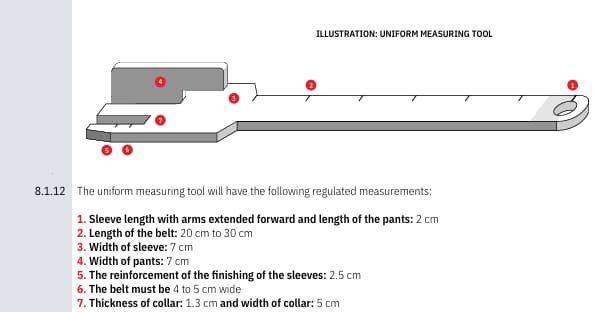
Before any match begins, gis are inspected using physical measuring tools rather than visual judgment. Inspectors measure sleeve length, pant length, collar dimensions, belt width, and the overall condition of the uniform. This inspection process is designed to remove subjectivity and ensure fairness across divisions.
Major organisations such as the International Brazilian Jiu-Jitsu Federation (IBJJF) and Abu Dhabi Jiu-Jitsu Pro (AJP) apply these standards consistently across their events. If you want general background on these organisations, you can reference their overviews on Wikipedia:
International Brazilian Jiu Jitsu Federation background
A gi can look completely normal in the changing room and still cause trouble once an inspector starts measuring it. That is why guessing is a rubbish strategy. Check the actual event rules and check your gi before you are standing at the venue with your division about to start.
IBJJF Gi Rules: Jacket, Sleeve, and Pant Fit

Under IBJJF gi rules, jacket sleeves must reach to within 2 centimetres of the wrist when the athlete extends their arms straight forward, parallel to the ground. Sleeves that fall shorter than this limit will fail inspection.
The jacket skirt must extend past the hips and reach the upper thigh area. Gi pants must reach to within 2 centimetres of the ankle bone, known as the tibial malleolus. Pants that sit too high above the ankle or extend excessively past the foot are not permitted.
Inspectors also check slack by pinching the fabric. A gi that is overly tight or excessively baggy may be deemed non-compliant, even if the length measurements appear acceptable.
AJP Gi Rules: Are the Fit Requirements Different?
The AJP gi rules closely mirror IBJJF standards when it comes to fit, measurements, and fabric requirements. Sleeve length, pant length, collar dimensions, and permitted colours are largely the same across both federations.
Where competitors may notice differences is in enforcement strictness, which can vary by event. Some tournaments apply measurements more aggressively than others, particularly at larger international events. Because of this, athletes are best served by preparing their gi to meet the strictest possible interpretation of the rules.
The sensible approach is not to assume one organisation’s approval automatically guarantees another’s. Check the current rules for the event you are actually entering, especially if you compete under more than one ruleset.
BJJ Gi Fit Rules Explained: Sleeves, Pants, and Collar
Understanding BJJ gi fit rules comes down to three core elements: length, thickness, and slack.
Collars are measured carefully. The maximum permitted collar thickness is 1.3 centimetres, and the maximum width is 5 centimetres. Reinforced collars, including those using EVA or similar materials, are allowed only if they remain within these limits.
Overly thick or stiff collars are a common reason a gi fails inspection, as they reduce the effectiveness of chokes and are considered an unfair equipment advantage.
Patch Placement Rules for a Competition Legal Gi
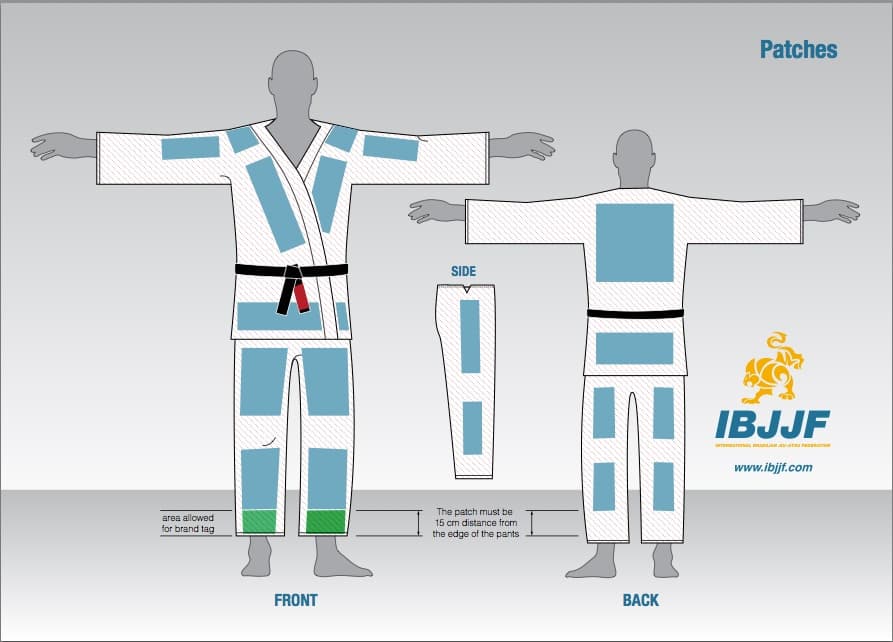
A competition legal gi must follow strict patch placement guidelines. Patches are only permitted in designated areas on the jacket and pants. Any patch placed outside these zones may be removed by the inspector.
Patches must be securely stitched and made from appropriate fabric. Loose, peeling, or improperly attached patches can result in inspection failure or forced removal on the day. Painted designs are generally prohibited unless they follow the same placement rules as stitched patches.
For more competition guidance, see our competition rules guide and gi sizing guide.
Colour, Fabric, and Overall Condition Requirements
Only white, royal blue, and black gis are permitted in most major competitions. The gi must be made from woven fabric, such as pearl weave, and must not be excessively thick or rigid.
The uniform must be clean, dry, and free from unpleasant odours. Tears, fraying, or visible damage can cause a gi to fail inspection regardless of fit.
For female divisions, fitted garments such as rashguards or elastic-fabric pants may be worn underneath the gi, provided they comply with colour and coverage requirements.
Why Gis Fail Competition Inspection
Some of the most common reasons a gi fails inspection include:
- Sleeves shortened by shrinkage
- Pants sitting too high above the ankle
- Collar thickness exceeding allowed limits
- Illegal or poorly secured patch placement
- Excessive slack or bagginess
- Dirty, wet, or damaged uniforms
Most of this is preventable. Five minutes checking your gi at home beats discovering the problem while your mates are already warming up and you are trying to find a legal replacement.
Choosing a gi as well as checking one?
Competition legality is one part of the buying decision. Fabric, weight, fit, durability and training use matter too.
Open the Complete BJJ Gi Buying GuideHow to Make Sure Your Gi Is Competition Legal
To ensure your gi is competition legal, wash it in cold water and allow it to air-dry well before competition. Test sleeve and pant length by extending your arms and standing naturally. Avoid wearing a brand-new gi for the first time at competition without pre-washing it.
Using the right size from the start makes compliance far easier. Check your measurements against our BJJ Gi Sizing Guide before competition.
If you are still deciding what to buy, our complete BJJ Gi Buying Guide NZ explains fabric types, fit, sizing and competition considerations in detail.
A competition legal BJJ gi is not about having the flashiest kit in the bullpen. It needs to comply with the rules of the event you are entering. Sort the fit and uniform requirements beforehand, then on competition day you can worry about your grips, your game plan and the considerably more important problem of the other person trying to pass your guard.
Check the Rest Before Comp Day
Use the sizing guide and full buying guide to check fit, fabric and competition considerations before you pack the bag.
Check Gi Sizing