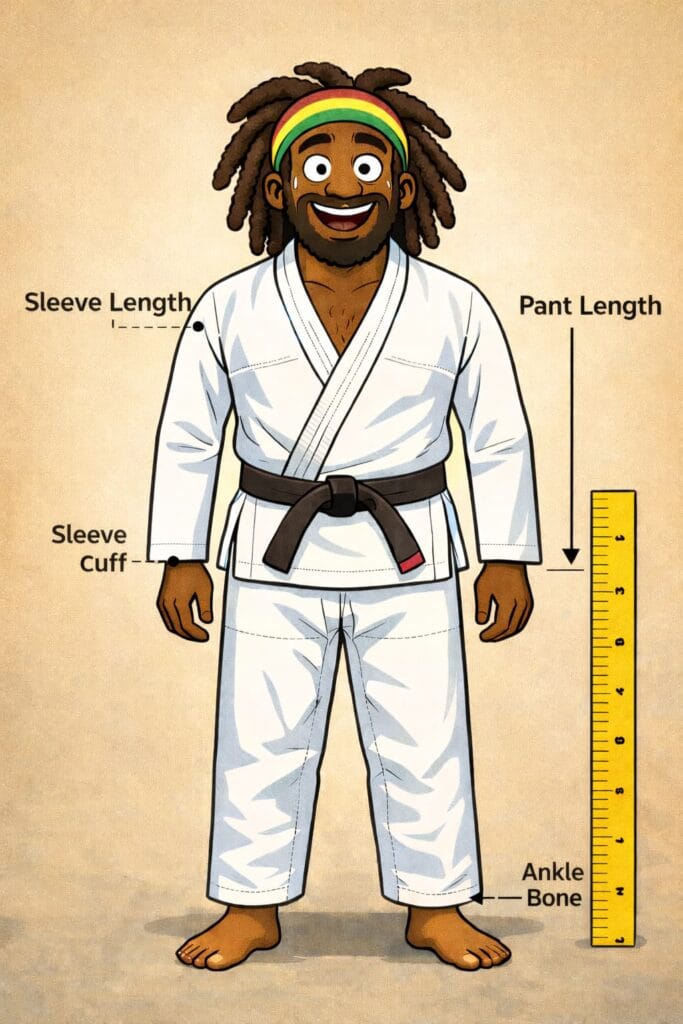
Buying your first Brazilian Jiu Jitsu gi can feel far more complicated than it needs to be. Product pages throw around terms like pearl weave, GSM, preshrunk fabric, ripstop and competition cut before you’ve even worked out how a gi is meant to fit. Fair enough if your head’s spinning.
Here’s the straight answer: as a beginner, you don’t need the most expensive gi or the fanciest fabric on the market. You need a gi that fits properly, survives regular training, is comfy enough to learn in and suits what you actually plan to do on the mats. Nail those and you’re sorted.
This guide walks through what to look for when choosing the best BJJ gi for beginners in New Zealand. For a deeper look at every buying factor, check out our complete BJJ Gi Buying Guide NZ.
What should you look for in the best BJJ gi for beginners?
For most beginners, five things matter way more than the logo on the sleeve: fit, fabric, jacket weight, durability and whether the gi will suit any comp you might enter down the track.
Fit
Jacket and pants should let you move freely without being baggy enough to hand your training partner free grips.
Fabric
A durable weave that handles constant gripping and washing is usually the safest bet.
Weight
Lighter gis run cooler and pack easier. Heavier fabrics can feel more substantial.
Construction
Reinforced stress points, solid stitching and decent trousers beat decorative patches every time.
Purpose
If comp is on the cards, pick a gi that won’t cause you grief at uniform inspection.
Get the size right before worrying about anything else
A premium gi in the wrong size is still the wrong gi. You can spend an absolute fortune on the flashest gi in the gym, but if it fits like your dad’s dressing gown, you have still bought the wrong gi. BJJ sizing does not line up neatly with everyday clothing sizes either, so your usual medium tells you very little.
Height and body weight are the starting point, but body shape matters too. A stocky athlete and a lanky one at the same weight may need quite different cuts. One might need more room through the chest and hips, the other more length in the sleeves and legs. That’s why mix and match jacket and trouser sizing is handy when standard sets don’t suit your proportions.
Our BJJ Gi Sizing Guide explains fit, shrinkage and the GoGetterGi sizing system in more detail.
What fabric is best for a first BJJ gi?
Pearl weave has become one of the most common choices for modern BJJ jackets because it strikes a practical balance between durability and weight. That said, the weave name alone doesn’t make a gi good. Yarn, finishing, reinforcement, stitching and overall construction all play a part in how the gi holds up through months of rolls.
If you want to get your head around materials before buying, read our BJJ Gi Fabric and Care guides and our Pearl Weave vs Gold Weave comparison.
What does GSM mean?
GSM stands for grams per square metre. On a BJJ gi spec sheet it normally describes the weight of the jacket fabric, not the total finished weight of the whole gi. A lower GSM jacket tends to feel lighter and dry faster, while a higher GSM fabric tends to feel denser and heavier.
We dig into this properly in our BJJ Gi GSM Guide.
Should your first gi be competition legal?
Even if comp isn’t on your radar yet, buying with it in mind can save you shelling out for another gi later. Plenty of people decide to give it a nudge after a few months of training. Different organisations can have different uniform requirements, so always check the rules for the actual event you’re entering.
Our Competition Legal BJJ Gi Guide explains the major fit and uniform considerations in more detail.
How much should a beginner spend?
There’s no magic price that makes a gi good. Focus on useful construction rather than paying extra for flash branding. A reliable first gi should have:
- Reinforcement in the areas that cop repeated stress
- Comfortable trousers you can actually move in
- A secure drawstring system that stays put during rolls
- A jacket that keeps its shape through normal training and washing
A bargain gi stops being a bargain if the stitching gives up before you do. On the other hand, you do not need some limited edition piece of grappling couture for your first Tuesday night fundamentals class. Buy something solid, get stuck in and upgrade once you actually know what you like.
One gi or two?
One gi will do the job when you are starting out and can wash and dry it between sessions. Once you are training four nights a week and trying to get the bloody thing dry before tomorrow’s class, you will understand why everyone eventually owns more than one. Rotating gis makes hygiene easier too, especially through a damp Kiwi winter.
Never leave a sweaty gi sitting in your training bag. Wash it promptly and follow the care instructions for the fabric. Your gear and your training partners will thank you.
Common first gi mistakes
- Buying based on your ordinary shirt or trouser size instead of the brand’s BJJ size chart.
- Buying an oversized gi because you expect dramatic shrinkage.
- Choosing only by GSM without considering weave and construction.
- Ignoring competition requirements until the day you decide to enter an event.
- Spending big on looks while overlooking fit and reinforcement.
- Training repeatedly in one unwashed or not quite dry gi.
A simple beginner buying checklist
Before you hit buy, run through this quick list:
- Confirm your height and weight
- Compare them with the brand’s size chart
- Decide whether you might compete
- Check the jacket fabric and GSM
- Look at trouser construction and reinforcement
- Read the washing instructions
If you’re between sizes, ask the seller rather than guessing. Easy as.
Frequently asked questions
What is the best type of BJJ gi for a beginner?
A well fitted, durable and comfortable gi matters more than any particular brand. A moderate weight pearl weave jacket is a practical starting point for many beginners because it balances weight and durability.
Can I use a judo gi for BJJ?
You may be able to train in one if your academy allows it, but judo and BJJ uniforms are cut for different purposes. If you’re buying specifically for BJJ, a BJJ gi is the more straightforward choice.
Should a beginner buy a lightweight gi?
A lightweight gi can be excellent in warm training rooms and for athletes who value fast drying and lower total weight. The tradeoff depends on the actual fabric and construction, so lightweight doesn’t automatically mean fragile.
What colour should my first gi be?
For ordinary academy training, follow your gym’s uniform policy. If you intend to compete, check the current rules of the organisation running the event before buying.
Where to go next
In short: get the fit right, choose a durable fabric, don’t obsess over GSM, think ahead about comp and spend your money on construction rather than hype. Do that and your first gi will serve you well through plenty of mahi on the mats.
Ready to compare sizing, materials and construction in more depth? Carry on with our BJJ Gi Buying Guide NZ, BJJ Gi Sizing Guide and Competition Legal Gi Guide.